




In short: dental veneers (known in Brazil as “dental contact lenses”) are ultra-thin shells, 0.2 to 0.6 mm thick, bonded to the front of the teeth to correct color, shape and alignment, usually with little or no tooth reduction. They can be made of porcelain (more aesthetic and durable, crafted in a lab) or composite resin (more affordable, shaped in the chair). With good care they last 10 to 15 years on average.
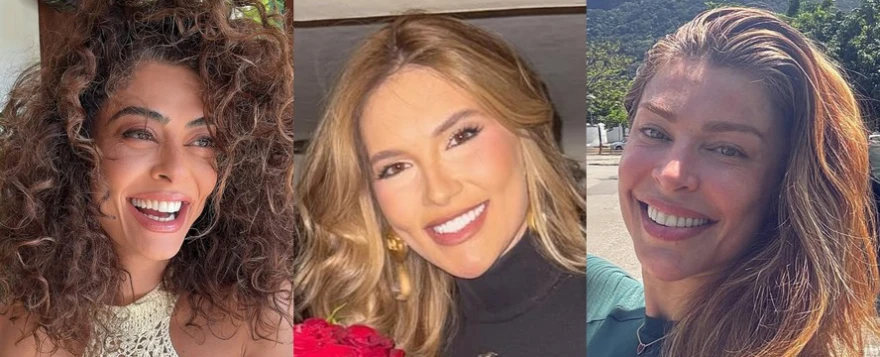
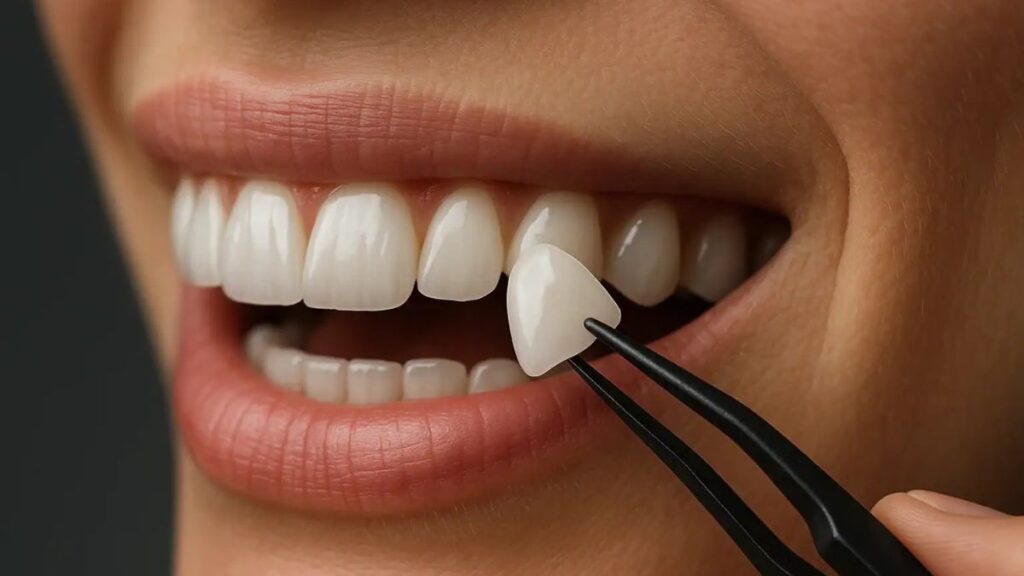
A favorite among celebrities, ultra-thin dental veneers are simply very thin porcelain shells (between 0.2 mm and 0.6 mm thick), highly resistant and very close in appearance to natural teeth, bonded to the front of the teeth to correct their color, alignment and shape.
Each veneer is custom-made in shape and shade for each patient, enhancing the aesthetics of the smile.
The great advantage of ultra-thin veneers is that they are bonded onto the natural tooth with zero or almost zero reduction. That is also why the technique poses no risk to the patient or their natural teeth.
It is worth noting that veneers do not need to cover the entire tooth surface to make the correction, which makes the procedure suitable for almost any type of imperfection.
The main difference between a traditional veneer and an ultra-thin veneer (the Brazilian “dental contact lens”) lies in the thickness and in how it is applied.
Traditional veneers are thicker and usually require some enamel reduction before they are placed, so they are ideal for covering larger imperfections.
Ultra-thin veneers, on the other hand, are extremely thin and in most cases require no reduction, so they are best for smaller aesthetic corrections, such as improving the color or alignment of the teeth.
🇧🇷🤔 Fun fact: the idea of a “dental contact lens” as something different from a “veneer” is popular only in Brazil. In the rest of the world, both are simply called “veneers”.
📚 See also: Ultra-thin veneers vs. porcelain veneers compared
Many people choose extremely white veneers, influenced by the media and celebrities who promote a bright white smile as the ideal standard of beauty.
But YES, you can absolutely choose a less white shade for your veneers.
When choosing the color, you can discuss your preferences with the dentist so that the veneers blend in with the natural shade of your teeth.
There are many shades that are not so bright, giving a more subtle and natural result without the “overly white” effect. The goal is a smile that looks beautiful and matches what you consider ideal.
Dental veneers usually last between 10 and 15 years, depending on oral health care and proper maintenance.
Although they are resistant, habits such as biting hard objects or grinding your teeth can shorten their lifespan.
Good hygiene habits, stain control and regular visits to the dentist are essential to make them last longer.
In most cases, the tooth does not need to be filed down to place an ultra-thin veneer. Because they are extremely thin, they can be bonded directly onto the enamel without compromising the natural structure of the tooth.
However, in some cases a slight reduction may be needed so that the veneer fits perfectly and delivers the best aesthetic result.
You may feel slight discomfort during the first few days after placement, as your mouth adapts to the new shape of the teeth. This initial discomfort is usually mild and goes away quickly.
After this adaptation phase, the veneers become unnoticeable.
Even though ultra-thin veneers are very thin and bonded to the front of the natural teeth with little reduction, anesthesia may be needed if the preparation reaches the dentin, an area that can cause some discomfort.
In these cases, anesthesia is used to avoid that “annoying little pain”, so the procedure can be completed more comfortably for the patient and more quickly by the dentist.
With dental veneers we can correct very common irregularities, such as:
They can also be used for almost any purely aesthetic treatment, since they allow us to change the color, shape and size of the teeth.


As you can see above, dental veneers can achieve different results and shades. Some patients want longer teeth, others want to close gaps between teeth, others want whiter teeth...
At the Guilherme Rothier clinic in Ipanema, we have the support of some of the best veneer specialists in Rio de Janeiro.
Exceeding your expectations with a perfect result is part of our daily routine!
Learn about the types of veneers and their main differences: aesthetics, price, strength and durability.
In terms of aesthetics, porcelain veneers are the best choice, as they reproduce the texture and color of natural teeth.
As for strength and durability, although the cost is a little higher because of the material, they are worth it: porcelain veneers are highly resistant to chewing forces and, according to studies, stay bonded for 5 to 10 years on average and can last up to 20 years.
Depending on the complexity of the imperfection to be corrected, porcelain veneers also deliver the best results.
Porcelain veneers require the skill of a dental technician, are made in a laboratory, and the preparation consists of a small reduction of 0.5 to 0.7 mm on the tooth surface, which is lightly sanded so the veneer can be bonded.
Another option is the composite resin veneer which, despite the aesthetic and durability limitations described below, can be an affordable and effective choice.
These veneers can be applied directly to the teeth and shaped by the dentist in the chair, with no need to sand the tooth, no laboratory work and no dental technician.
Resin veneers last less than porcelain veneers, which are highly resistant to chewing forces — another key difference between the two types.
The main advantages of resin veneers are that they preserve the tooth structure, since the tooth does not need to be reduced, and that they are more affordable.
📚 Read also: Differences between porcelain veneers and ultra-thin veneers.
| Criterion | Porcelain veneer | Resin veneer |
|---|---|---|
| Aesthetics | Reproduces the texture and color of natural teeth | Good, with some aesthetic limitations |
| Durability | Higher; very resistant to chewing | Lower than porcelain |
| Tooth preparation | Small reduction of 0.5 to 0.7 mm | No need to sand the tooth |
| Fabrication | In a lab, by a dental technician | Directly in the chair |
| Cost | Higher | More affordable |
It is not only celebrities in Rio de Janeiro and around the world who are looking for this treatment! Many people want a fast, flawless result with dental veneers, attracted by how quick the procedure is and by its impeccable results. Here is how it works:
The Dr. Guilherme Rothier dental clinic has excellent cosmetic dentists who specialize in placing dental veneers in Ipanema.
Located in a privileged area of the Marvelous City, our dental office has state-of-the-art equipment for a wide range of treatments, all aimed at providing peace of mind and well-being to patients at every stage of life, from childhood to adulthood.
I had an amazing experience at Dr. Guilherme Rothier’s clinic. I had dental veneers placed and I am extremely satisfied with the results. Dr. Guilherme and his team were professional, attentive and dedicated throughout the whole process. The veneers completely transformed my smile, in a natural way. Thank you, Dr. Guilherme Rothier! I recommend his services to anyone who wants a perfect smile!
Roberto Silva

At the Guilherme Rothier Clinic, dental veneers in Ipanema are planned tooth by tooth, with a shape and shade tailored to your face and to the result you want — from natural white to a brighter smile.
Whenever possible, veneers are bonded onto the enamel, preserving the natural tooth.
The color is defined during the consultation to avoid an “overly white” look.
We recommend the material based on aesthetics, durability and the budget of each case.
Stains, worn, chipped or misaligned teeth and gaps between teeth.
Fill out the form below and our team will contact you to schedule the best day and time for your appointment. If you prefer, call: